
Recurrences
Question 1 |
Let an represent the number of bit strings of length n containing two consecutive 1s. What is the recurrence relation for an?
an-2 + an-1 + 2n-2
| |
an-2 + 2an-1 + 2n-2 | |
2an-2 + an-1 + 2n-2 | |
2an-2 + 2an-1 + 2n-2 |
So, a1 = 0
For string of length 2,
a2 = 1
Similarly, a3 = 3
a4 = 8
Only (A) will satisfy the above values.
Question 2 |
DOSOMETHING (c, a, n)
z ← 1
for i ← 0 to k – 1
do z ← z2 mod n
if c[i] = 1
then z ← (z × a) mod n
return z
If k = 4, c = 〈1, 0, 1, 1〉, a = 2 and n = 8, then the output of DOSOMETHING(c, a, n) is
0 | |
1 | |
2 | |
3 |
Question 3 |

The equality above remains correct if X is replace by
Only I | |
Only II | |
I or III or IV but not II | |
II or III or IV but not I |
Question 4 |
Let xn denote the number of binary strings of length n that contain no consecutive 0s.
Which of the following recurrences does xn satisfy?
xn = 2xn-1
| |
xn = x⌊n/2⌋+1 | |
xn = x⌊n/2⌋+n | |
xn = xn-1+xn-2
|
⇒ Let us consider n=1
Possible binary strings: 0, 1
So, x1 = 2
⇒ For n = 2;
Possible strings are,
010
110
111
011
101
So, x3 = 5
⇒ For n=4,
Possible strings are
0 1 1 1
1 0 1 1
1 1 0 1
1 1 1 0
0 1 1 0
0 1 0 1
1 0 1 0
1 1 1 1
So,
x4=8,
Hence, for all values of x4 above only option (D) satisfies.
Question 5 |
Let xn denote the number of binary strings of length n that contain no consecutive 0s.
The value of x5 is
5 | |
7 | |
8 | |
16 |
xn = xn-1 + xn-2
satisfies.
And also we have found the value of x4 and x3 for the above equation.
So, according to the equation the value of x5 will be,
x5 = x3 + x4
= 5 + 8
= 13
Hence , none of the given option is correct.
Question 6 |
The recurrence equation
   T(1) = 1
   T(n) = 2T(n - 1) + n, n ≥ 2
evaluates to
2n+1 – n – 2 | |
2n – n | |
2n+1 – 2n – 2 | |
2n + n |
T(n) = 2T(n-1) + n
T(2) = 2T(1) + 2 = 2 + 2 = 4
T(3) = 2T(2) + n = 2(4) + 3 = 11
T(4) = 2T(3) + 4 = 22 + 4 = 26
Let check with the options:
Option A:
n=4
24+1 - 4 - 2
32 - 6
26 (✔️)
Option B:
n=4
2n-n
24-4
12(✖️)
Option C:
n=4
24+1 - 2(4) - 8
32 - 10
22(✖️)
Option D:
n=4
2n - n
24 - 4
12(✖️)
Question 7 |
Consider the following recurrence relation
T(1) = 1
T(n+1) = T(n) + ⌊√n+1⌋ for all n≥1
The value of T(m2) for m ≥ 1 is
 | |
 | |
 | |
 |

Considering floor value for square root of numbers.
Successive root number of numbers are in the series 3, 5, 7, ... like 3 numbers from 1... 4, 5 numbers 5-9 and so on.

Question 8 |
The solution to the recurrence equation T(2k) = 3 T(2k-1) + 1, T(1)=1, is:
 | |
 | |
 | |
 |
T(1)=1
k=0; T(1) = 3T(2-1)+1
k=1; T(2) = 3T(20)+1 = 3(1)+1 = 4
k=2; T(4) = 3T(21)+1 = 3(4)+1 = 13
k=3; T(8) = 3T(22)+1 = 3(13)+1 = 40
k=4; T(16) = 3T(23)+1 = 3(40)+1 = 121
Simply go through the options.
Option B:
k=4 ⇒ (34+1-1)/2
⇒ (243-1)/2
⇒ 121
Question 9 |
The Fibonacci sequence {f1,f2,f3,...,fn} is defined by the following recurrence:
fn+2 = fn+1 + fn, n ≥ 1; f2=1 : f1=1
Prove by induction that every third element of the sequence is even.
Theory Explanation. |
Question 10 |
For parameters a and b, both of which are ω(1), T(n) = T(n1/a)+1, and T(b)=1.
Then T(n) is
θ(loga logb n) | |
θ(logb loga n)
| |
θ(log2 log2 n)
| |
θ(logab n)
|
T(n) = [T(n1/a2)+1] + 1
= [T(n1/a3)+1] + 2
= [T(n1/a3)] + 3
= [T(n1/ak)] + b
= logb n = ak
= log logb n = k log a
= k= loga logb n
T(n)=1+loga logb n
T(n)=O(loga logb n)
Question 11 |
(a) Use the patterns given to prove that

(You are not permitted to employ induction)
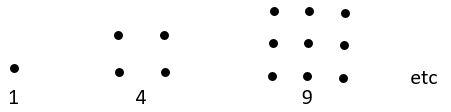
(b) Use the result obtained in (a) to prove that

Theory Explanation. |
Question 12 |
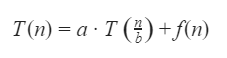
Which one of the following options is correct about the recurrence T(n)?
 | |
 | |
 | |
 |
